

Applying for citizenship with criminal record New York is possible, but the type of conviction, when it occurred, and how you have addressed it determine whether your N-400 application will succeed. USCIS evaluates every naturalization applicant for good moral character, and certain criminal convictions can create permanent bars, temporary bars, or discretionary denials. Understanding how your specific record affects your citizenship with criminal record New York case your citizenship with criminal record New York case is the first step in building a successful application.
How USCIS Evaluates Criminal Records for Naturalization
Here is the reality: USCIS does not automatically deny every naturalization applicant with a criminal record. The agency looks at the specific offense, the date of conviction, and the sentence imposed. Some convictions create permanent bars to good moral character, others create conditional bars, and some do not affect your case at all.
I have seen too many people assume a single mistake from years ago makes citizenship impossible. That is not always true. At Zavala Immigration Law Firm, we evaluate your complete criminal history for citizenship with criminal record New York and tell you honestly whether citizenship with criminal record New York is achievable or whether you need to address the record first.
The Good Moral Character Requirement
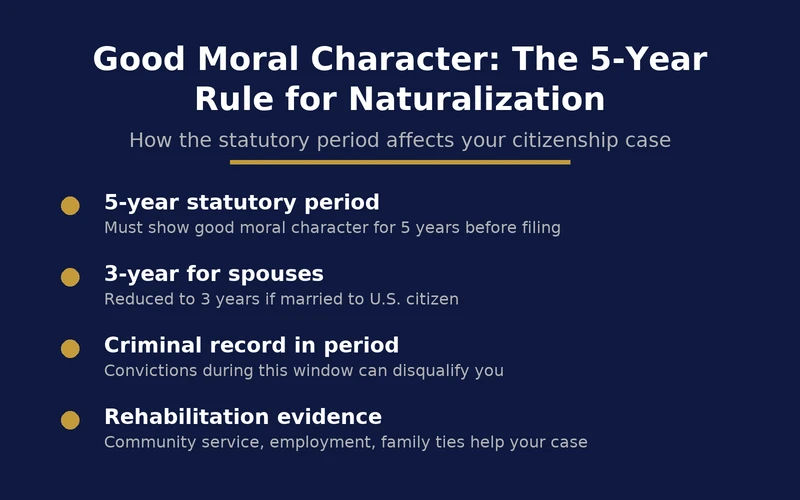
Every naturalization applicant must demonstrate good moral character during the statutory period, which is 5 years for most applicants and 3 years for spouses of U.S. citizens. The USCIS Policy Manual defines the standards for good moral character and the criminal offenses that affect it.
The Statutory Period and What It Means
USCIS primarily looks at your record during the 5-year statutory period. However, certain offenses, including aggravated felony convictions at any point in your life, can permanently bar you from establishing good moral character. The timing of your conviction matters enormously.
- Conviction during the statutory period can result in denial
- Conviction before the statutory period may not affect your case
- Aggravated felony convictions create a permanent bar regardless of timing
- Expunged or vacated convictions may not count as convictions for immigration purposes
Practical rule: An aggravated felony conviction at any point in your life creates a permanent bar to good moral character. Know whether your conviction qualifies before filing your N-400.
Crime Types and Their Immigration Consequences
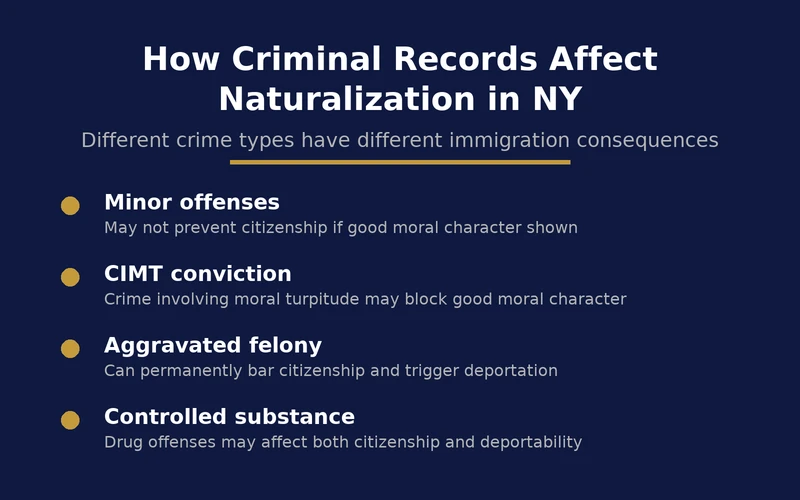
Not all criminal convictions affect citizenship with criminal record New York the same way. Understanding the category your conviction falls into determines your strategy.

Crimes Involving Moral Turpitude (CIMT)
A crime involving moral turpitude is a category that includes fraud, theft, assault with intent to harm, and other offenses involving dishonesty or inherently wrongful conduct. A CIMT conviction during the statutory period creates a conditional bar to good moral character. However, the petty offense exception may apply if the maximum penalty does not exceed 1 year and the actual sentence was 6 months or less. The INA definitions on law.cornell.edu provide the statutory framework.
Aggravated Felonies
An aggravated felony in immigration law is broader than in criminal law. It includes offenses that may be classified as misdemeanors in New York state court. Drug trafficking, firearms offenses, sexual abuse of a minor, theft with a sentence of 1 year or more, and certain fraud offenses with a loss exceeding $10,000 all qualify. An aggravated felony conviction creates a permanent bar to naturalization and can trigger deportation proceedings.
Controlled Substance Offenses
Any controlled substance conviction, except a single offense of simple possession of 30 grams or less of marijuana, creates inadmissibility and deportability concerns. Drug convictions can prevent you from establishing good moral character and may result in referral to immigration court.
| Crime Type | Effect on Naturalization | Can You Still Apply? |
|---|---|---|
| Minor traffic violation | No effect on good moral character | Yes, with no restrictions |
| DUI/DWI | May affect good moral character if recent | Yes, but must show rehabilitation |
| Simple assault (misdemeanor) | May qualify as CIMT, depends on specifics | Possibly, with legal analysis |
| Theft offense | CIMT if sentence under 1 year, aggravated felony if over | Depends on sentence length |
| Drug possession (over 30g marijuana) | Bars good moral character | Very difficult without post-conviction relief |
| Aggravated felony | Permanent bar to good moral character | No, not eligible for naturalization |
| Domestic violence conviction | May be CIMT and deportable offense | Requires detailed legal analysis |
Practical rule: Immigration law defines aggravated felony more broadly than criminal law. A New York misdemeanor can be an aggravated felony for immigration purposes. Never assume your conviction is minor without consulting an immigration attorney.
Strategies for Naturalization With a Criminal Record
If you have a criminal record, there are legal strategies that may help you qualify for citizenship with criminal record New York despite citizenship with criminal record New York despite your convictions.
Post-Conviction Relief and Vacatur
If your conviction can be vacated or expunged through post-conviction relief, it may no longer count as a conviction for immigration purposes. This requires working with both a criminal defense attorney and an immigration attorney. A vacatur based on a legal defect in the conviction, not just rehabilitative purposes, removes the immigration consequences.
Waiting for the Statutory Period to Reset
If your conviction was for a non-permanent bar offense, waiting until the statutory period resets can help. If you were convicted 6 years ago and the statutory period is 5 years, the conviction falls outside the period USCIS evaluates. However, USCIS can still look at pre-statutory period conduct to assess character.
Demonstrating Rehabilitation
Even with a conviction in your past, evidence of rehabilitation can strengthen your case. Community service, steady employment, family responsibilities, and letters of recommendation from community leaders all support a showing of good moral character. Our naturalization attorney team helps clients build rehabilitation narratives.
The Risk of Filing Without Legal Analysis
Filing an N-400 application without first having an attorney evaluate your criminal record is one of the most dangerous things an immigrant can do. If USCIS finds you have a deportable offense during the naturalization review, they can refer your case to immigration court for removal proceedings.
When Naturalization Applications Lead to Deportation
USCIS has the authority to refer applicants to ICE for removal proceedings if the application reveals a deportable offense. This means that filing for citizenship can actually trigger deportation if you have certain convictions. The DOJ Executive Office for Immigration Review oversees immigration courts where these removal cases are heard.
Why an Attorney Must Review Your Record First
Before filing your N-400 application, an immigration attorney should review your complete criminal record, including all arrests, charges, dispositions, and sentences. Only after this review should you decide whether to file. Our deportation defense team provides this analysis for every client.
Practical rule: Filing for naturalization without having your criminal record reviewed by an immigration attorney can trigger deportation proceedings. Always consult first.
New York Criminal Courts and Immigration Consequences
New York criminal court dispositions have specific characteristics that affect immigration outcomes. Understanding how New York courts classify offenses helps you understand your immigration situation.
New York Classifications vs Federal Immigration Classifications
New York classifies offenses as violations, misdemeanors, and felonies. However, immigration law uses its own classification system. A New York class A misdemeanor can be an aggravated felony under immigration law if the sentence is 1 year or more. The classification mismatch is why an immigration attorney must review your record, not just a criminal defense attorney.
Sealed Records and Immigration Disclosure
In New York, certain criminal records can be sealed. However, for immigration purposes, you must disclose all arrests and convictions even if they are sealed in New York. Failing to disclose sealed records can result in denial for lack of good moral character due to lack of candor. The USCIS requires full disclosure of all arrests, charges, and convictions.
Practical rule: Sealed records in New York must still be disclosed to USCIS. Failing to disclose a sealed conviction can be worse than the conviction itself.
Building a Strong Naturalization Case With a Criminal Record
If you are pursuing citizenship with criminal record New York, building a strong case means documenting everything that shows you have turned your life around. The strength of your rehabilitation evidence can make the difference between approval and denial.
Character References That Matter
Letters from employers, religious leaders, community organizations, and family members carry significant weight. The best references come from people who have known you for years and can speak to specific examples of your good character, work ethic, and community contributions. Generic letters that say you are a good person do not help as much as detailed letters describing specific actions.
Employment and Tax Records
Consistent employment and timely tax payments demonstrate stability and responsibility. Bring 5 years of tax returns, recent pay stubs, and a letter from your employer confirming your position and tenure. If you own a business, bring business registration documents and tax filings. The IRS tax information for immigrants page provides guidance on tax compliance.
Community Involvement and Volunteer Work
Documented community service, volunteer work, church involvement, and coaching youth sports all demonstrate good moral character. Keep records of your activities, including dates, organizations, and supervisors who can verify your participation. Our citizenship attorney team helps clients organize this evidence effectively.
Practical rule: The quality of your rehabilitation evidence matters more than the quantity. One detailed letter from a supervisor who has known you for 10 years beats 20 generic character letters.
When to Wait Before Filing Your N-400
Sometimes the best strategy for citizenship with criminal record New York is citizenship with criminal record New York is to wait before filing. Filing too early can result in denial and potentially trigger removal proceedings.
Waiting for the Statutory Period to Reset
If your conviction was for a non-permanent bar offense and occurred 4 years ago, waiting one more year allows it to fall outside the 5-year statutory period. Once the conviction is outside the statutory period, it does not automatically bar good moral character, though USCIS can still consider it.
Completing Probation or Parole
USCIS generally considers probation and parole as part of a criminal sentence. Filing while on probation can raise concerns about rehabilitation. Completing your probation and demonstrating stability afterward strengthens your case. The USCIS Policy Manual provides guidance on how probation affects naturalization eligibility.
Addressing Pending Criminal Cases
If you have a pending criminal case, do not file your N-400 application until the case is resolved. USCIS cannot approve a naturalization application while criminal charges are pending. Wait for the disposition, then consult an attorney about the immigration consequences before filing.
Working With Both Criminal and Immigration Attorneys
Pursuing citizenship with criminal record New York often requires coordination between your immigration attorney and your criminal defense attorney. The two areas of law interact in ways that a single attorney may not fully understand.
Why Your Criminal Attorney Needs to Understand Immigration Consequences
Not all criminal defense attorneys understand the immigration consequences of plea deals. A plea to a lesser charge that seems like a good outcome in criminal court can create a deportable offense in immigration court. Before accepting any plea, your criminal attorney should consult with an immigration attorney to evaluate the consequences. Our team works alongside criminal defense attorneys throughout New York to ensure plea deals do not create immigration problems.
Post-Conviction Relief as an Immigration Strategy
If a prior conviction is blocking your naturalization, post-conviction relief may be available for your citizenship with criminal record New York case. A motion to vacate based on ineffective assistance of counsel, constitutional violations, or newly discovered evidence can potentially remove the conviction for immigration purposes. However, the vacatur must be based on a legal defect, not just for immigration benefit. The New York courts website provides information on post-conviction procedures.
Sealed Versus Vacated Records
A sealed record still counts as a conviction for immigration purposes. You must disclose it to USCIS. A vacated record, if vacated based on a legal defect, may no longer count as a conviction. The distinction between sealing and vacating is important for your citizenship with criminal record New York case. Never assume a sealed record disappears from USCIS view.
Frequently Asked Questions About Citizenship With a Criminal Record
| Question | Answer |
|---|---|
| Can I apply for citizenship with criminal record New York? | It depends on the offense. Some convictions do not affect eligibility, while others create temporary or permanent bars. An attorney must review your specific record. |
| Will USCIS find my sealed New York record? | Yes, through FBI background checks. You must disclose all arrests and convictions even if sealed in New York. |
| Can a DUI prevent me from getting citizenship? | A single DUI may not bar good moral character, but multiple DUIs or a recent conviction can raise character concerns. Demonstrate rehabilitation. |
| What is an aggravated felony in immigration law? | It is broader than criminal law and includes theft with a 1-year sentence, drug trafficking, and certain fraud offenses. It creates a permanent bar to naturalization. |
| Can I expunge my record for immigration purposes? | Only a vacatur based on a legal defect removes immigration consequences. A rehabilitative expungement does not erase the conviction for USCIS. |
| Can filing for citizenship trigger deportation? | Yes. If USCIS finds a deportable offense during the naturalization review, they can refer your case to immigration court. |
| Should I wait before filing my N-400? | If your conviction falls outside the 5-year statutory period, waiting may help. But consult an attorney first to evaluate all risks. |
Fighting for Your Citizenship Despite Your Record
A criminal record does not automatically close the door to citizenship with criminal record New York citizenship with criminal record New York, but it requires careful legal analysis before you file. Call our team at (718) 717-7989 or visit our contact page to schedule a consultation. Zavala Immigration Law Firm fights for New York immigrants every day, and we will tell you the truth about your case. If your record allows for naturalization, we will build the strongest possible application. If it does not, we will tell you what steps you need to take first, whether that means seeking post-conviction relief, waiting for the statutory period to reset, or addressing other issues. You deserve honest legal advice from attorneys who understand both criminal and immigration law. Do not let fear of your record keep you from exploring your options. Many immigrants with criminal histories have successfully naturalized after taking the right legal steps. The path may be longer, but it is not always closed. The first step is getting honest legal advice from an attorney who understands both criminal and immigration law and will tell you exactly where you stand. Many immigrants with criminal histories have successfully naturalized after taking the right legal steps. The path may be longer, but it is not always closed. The first step is getting honest legal advice from an attorney who understands both criminal and immigration law and will tell you exactly where you stand.
About Desiree Borges-Tosado, Desiree Borges-Tosado is an attorney at Zavala Immigration Law Firm in New York. With Puerto Rican roots and a JD from Pontifical Catholic University, she brings a background in public policy and immigration courts to every case. She handles deportation defense, asylum claims, immigration bonds, and BIA appeals with a fierce, direct approach that tells clients the truth upfront and fights aggressively for their rights.